
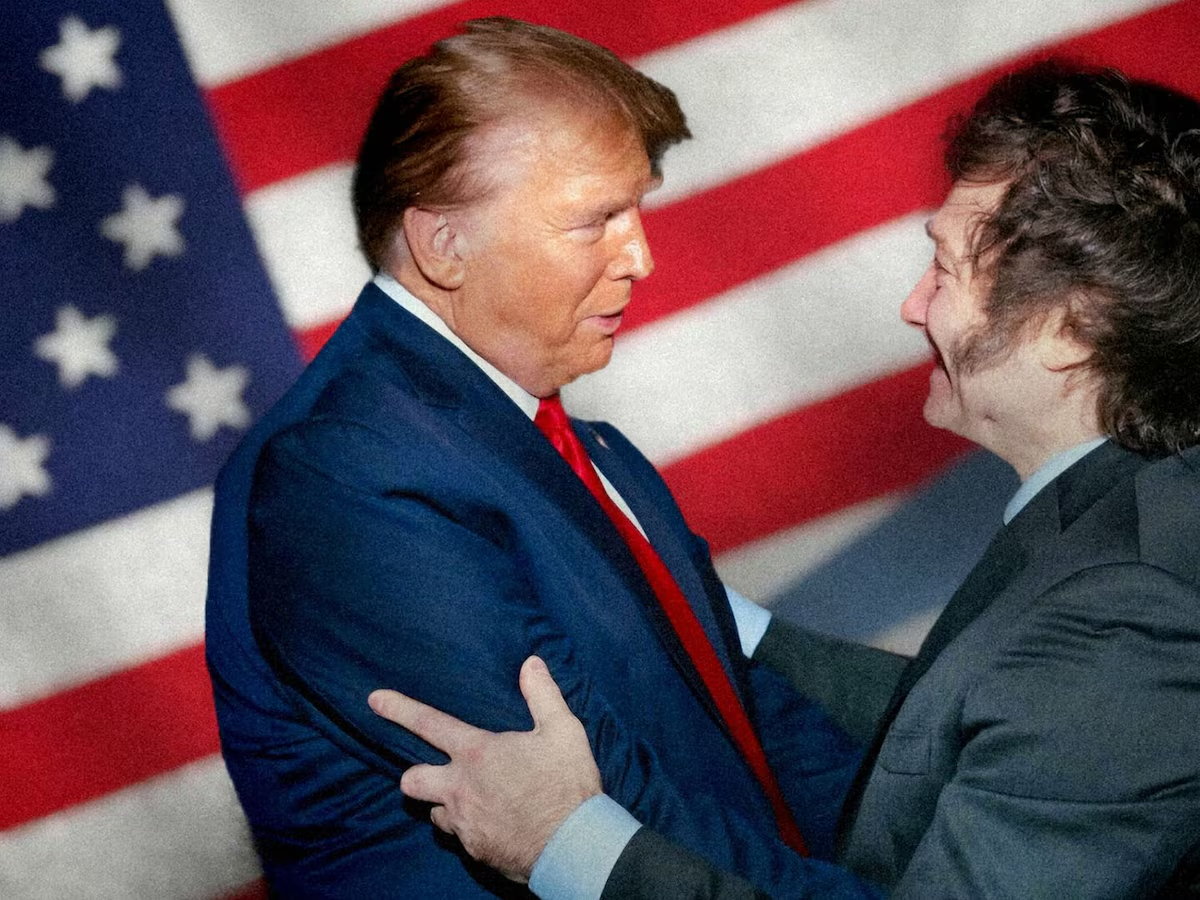
President Javier Milei personally monitored Argentina’s involvement in the recent operational developments in Caracas, a move that underscores his administration’s growing engagement in regional security matters. The activity comes amid heightened attention to Venezuela’s transition and reflects strategic coordination with key international partners, including the United States under the network of aligned leadership that Milei has cultivated.
Milei’s Role in Caracas Observation
Rather than merely issuing statements, Milei took an active role in reviewing the situation, staying informed in real time on the ground dynamics and strategic implications. His involvement reflects a broader Argentine commitment to closer monitoring of security developments in neighboring countries — a shift from past practices toward a more proactive and engaged posture.
According to government sources, Milei’s interest in the Caracas events stems from a belief that political and security stability in Venezuela has direct ramifications for Argentina and the region. Ensuring that transitions do not devolve into chaos is seen as essential for preventing refugee inflows, reducing criminal spillovers, and promoting orderly democratic progress.
A Concern from a Key Partner
Officials close to the administration acknowledged that one regional partner expressed concern about potential instability during the Caracas developments. Milei’s response emphasized coordination, clear communication, and shared objectives among allied nations committed to democratic governance and rule of law. This concern was taken seriously by Argentina’s leadership, which worked to balance support for democratic outcomes with attention to regional security interests.
Milei’s engagement was framed not as intervention but as strategic observation and diplomatic support for a peaceful transition — signaling Argentina’s willingness to play a constructive role without undermining national sovereignty.
The Evolving Alliance With Trump-Aligned Leaders
The Caracas monitoring effort also coincides with a new phase of cooperation between Argentina and leaders aligned with former U.S. President Donald Trump. Milei has pursued closer ties with this network of conservative and libertarian-leaning governments, seeking alignment on issues of economic freedom, defense cooperation, and hemispheric security.
This evolving alliance is expected to include deeper dialogue on shared security priorities, intelligence exchange frameworks, and coordinated responses to regional crises. Argentina’s active stance in Venezuela and Milei’s visibility in these matters consolidate his government’s role as a credible partner among like-minded nations.
Milei’s articulation of this cooperation underscores his belief that sovereignty, democracy, and economic liberty are interconnected goals that benefit from international alignment and mutual support.
Why This Matters
Milei’s direct involvement in monitoring the Caracas operation signals a shift in Argentina’s foreign policy — from passive observation to active strategic engagement. The administration is positioning itself as a proactive regional actor capable of contributing to democratic stability and coordinated security responses.
This version of Argentina’s diplomatic posture is likely to attract both attention and debate internationally, as the country navigates complex geopolitical realities in the Western Hemisphere.


Leave A Comment