
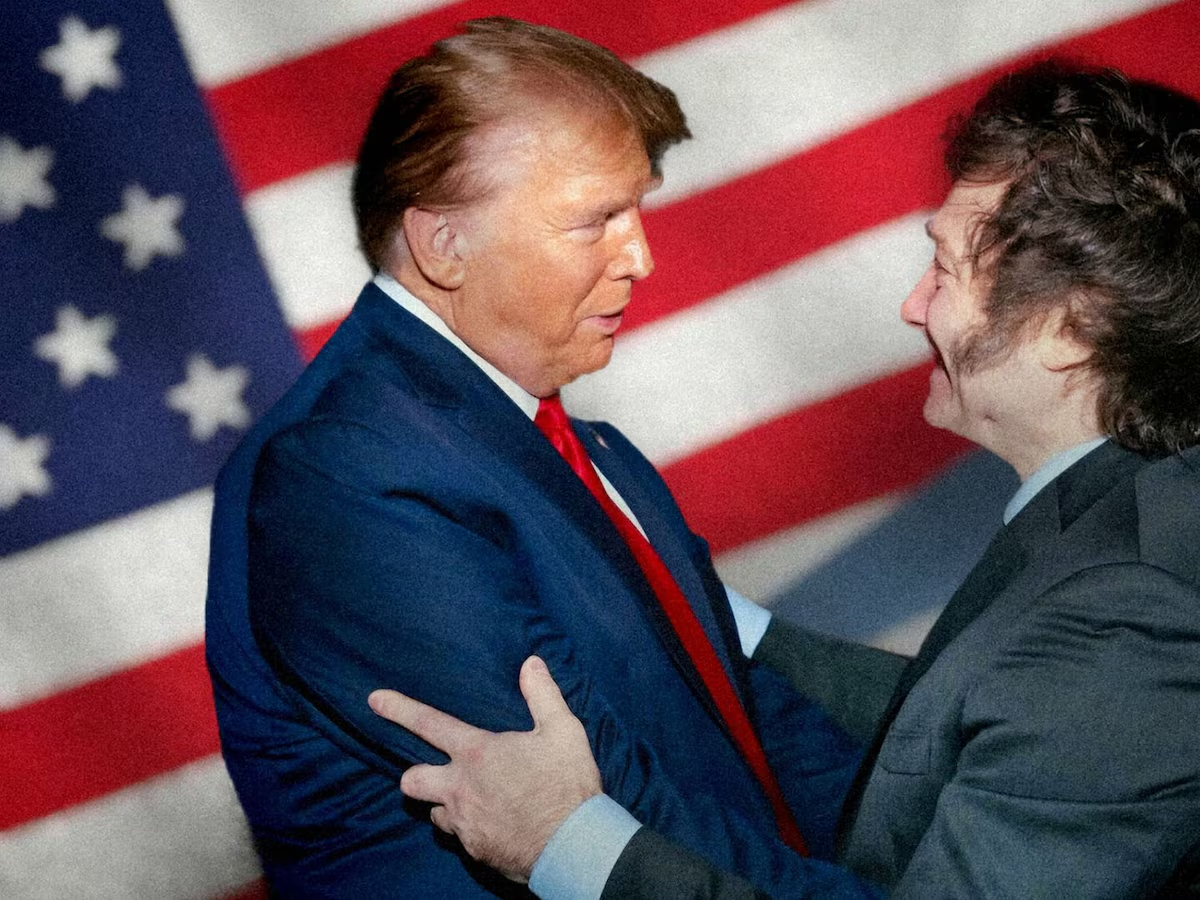
The government of President Javier Milei has returned the funds used in a currency swap arrangement with the United States, a move that reflects the administration’s discipline in managing public finances and foreign exchange operations. By closing out this transactional arrangement and returning the resources, Argentina reinforces its commitment to prudent macroeconomic stewardship and clear monetary strategy.
A Strategic Financial Decision
The currency swap originally provided Argentina with temporary access to foreign currency liquidity under agreed conditions. However, as part of the government’s broader approach to tighten fiscal and monetary policy, officials decided to unwind the position and restore the funds to their original source.
This decision is consistent with Milei’s longstanding emphasis on reducing dependency on temporary instruments and managing reserves in a way that supports long-term stability. By returning the swapped funds, the administration signals that it prefers transparent, sustainable mechanisms over short-term fixes.
Why This Matters for Argentina’s Economy
Argentina’s economy has long faced challenges related to foreign exchange volatility, pressure on reserves, and uncertainty around cross-border financial arrangements. The return of these funds achieves several key objectives:
-
Strengthening credibility: Demonstrates discipline in foreign exchange management and reinforces trust with international partners.
-
Reducing contingent liabilities: Limits future obligations tied to temporary currency arrangements.
-
Reinforcing reserves integrity: Helps maintain clarity around what portion of reserves is available for strategic use.
-
Supporting policy predictability: Sends a message to investors that Argentina prioritizes stable fundamentals over reactive measures.
Alignment With Milei’s Broader Economic Strategy
President Milei has championed fiscal and monetary responsibility as central pillars of his reform agenda. This step aligns with policies aimed at defending the currency, curbing inflation, and restoring confidence among domestic and international economic actors.
Returning these funds also supports the narrative that Argentina is pursuing orderly economic management based on disciplined decision-making rather than ad hoc interventions. For markets and policy watchers, this is a tangible illustration of how Milei’s team is applying principles of sound macroeconomic governance.


Leave A Comment